What Is Review Gating?
Review gating is selectively encouraging satisfied customers to leave public reviews while discouraging or diverting dissatisfied customers from doing so.
Review gating can occur in customer satisfaction surveys, QR code funnels, and automated post-purchase campaigns.
How Review Gating Works
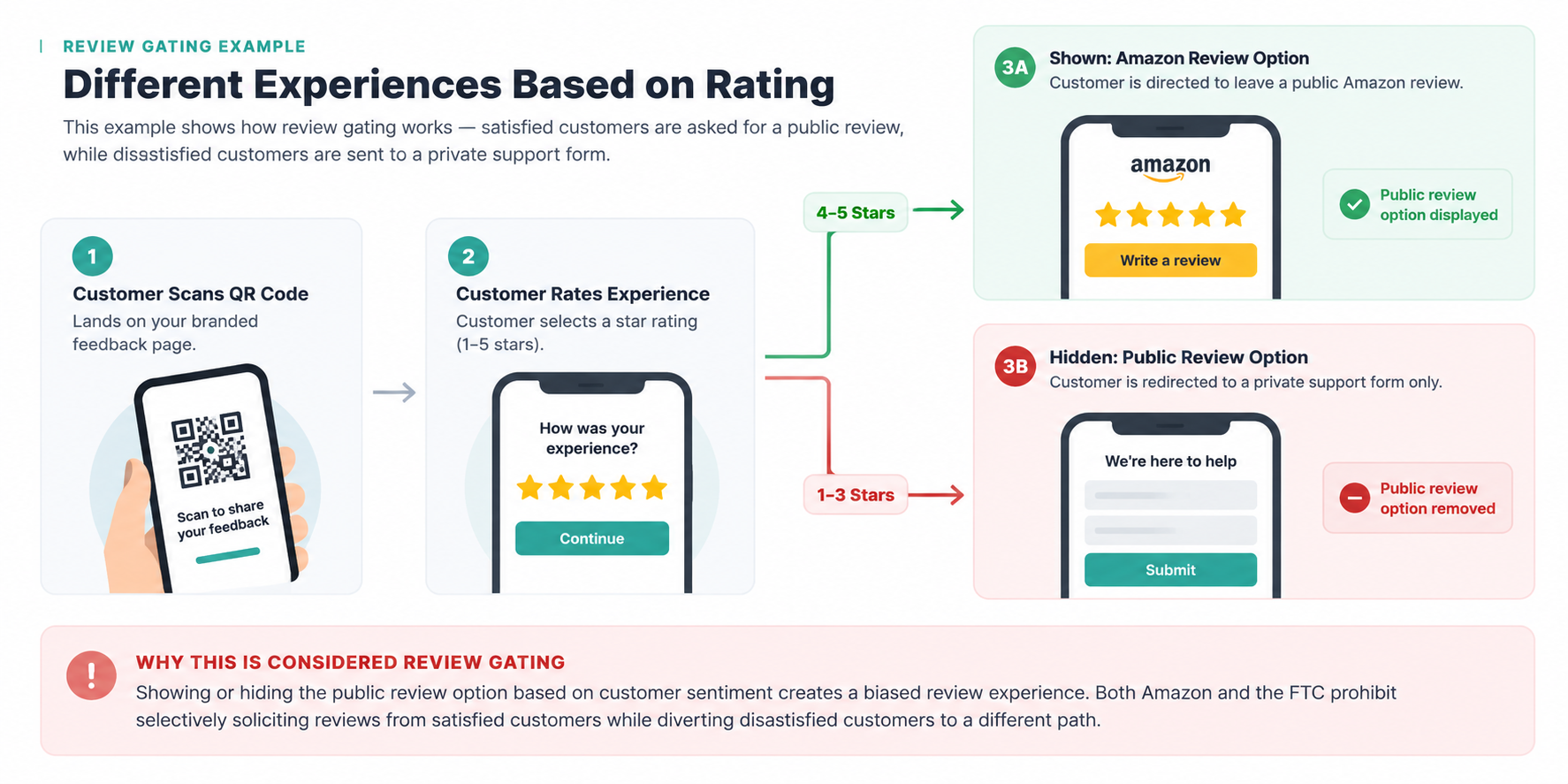
Imagine a customer scans a QR code and is asked to rate their product experience.
Customers selecting five stars receive an Amazon review request. Customers selecting one or two stars are directed only to a private support form.
Learn More About Review Gating
Want to understand how review gating works in ReviewScanGo campaigns? Our Help Center explains our "Smart Reviews" option in the campaign settings.
View Review Gating Help Guide →Examples of Review Gating
- Only asking satisfied customers for Amazon reviews.
- Hiding review links after negative survey responses.
- Sending review requests only to customers giving high ratings.
- Directing unhappy customers exclusively to private support.
- Offering different review opportunities based on sentiment.
Why Review Gating Is Risky
Amazon prohibits selectively soliciting reviews from customers who had positive experiences while diverting dissatisfied customers elsewhere.
These practices can distort the public review picture and expose sellers to enforcement actions.
Is Review Gating Allowed on Your Own Website?
Review gating rules can differ depending on where customer reviews are collected and displayed. While Amazon explicitly prohibits selectively soliciting positive reviews, businesses operating their own websites have more flexibility in how they collect customer feedback.
For example, a business may use a satisfaction survey on its own website to identify unhappy customers and direct them to customer support, while inviting satisfied customers to share testimonials or additional feedback.
Unlike Amazon, an independent website is not automatically subject to Amazon's customer review policies. However, businesses must still comply with applicable consumer protection laws, including FTC regulations against deceptive review practices.
When Website Feedback Routing May Be Appropriate
- Private customer satisfaction surveys: Businesses can use customer ratings to identify problems and prioritize customer support.
- Customer service follow-ups: Dissatisfied customers can be directed to troubleshooting resources or support teams to resolve their concerns.
- Testimonial collection: Businesses can invite customers to share testimonials, provided their selection, presentation, and any disclosures do not create a misleading impression of typical customer experiences.
- Internal feedback analysis: Companies can segment private feedback by satisfaction level to improve their products and services.
Amazon's review solicitation policies apply to activity governed by its marketplace rules. Independent websites may have greater flexibility when collecting private feedback, but FTC rules and other consumer protection laws still apply. There is no blanket exemption for review gating simply because reviews appear on a business-owned website.
Safer Alternatives
Design customer experiences that do not condition review solicitation on satisfaction scores.
More Transparent Approach
Present neutral review and support options without hiding or changing review access based on a customer's reported satisfaction.
Can Sellers Collect Private Feedback?
Yes. Private feedback can help identify defects, shipping problems, and customer service issues.
The concern is using that feedback to decide which customers will receive public review requests.
Customer satisfaction should inform product improvements, not determine who is asked to leave a public review.
Official Reference: Amazon Customer Reviews Policy