Compliant vs. Non-Compliant Review Funnels
A review funnel is the sequence of steps a customer follows after receiving a review request, scanning a QR code, or visiting a post-purchase landing page.
Even a neutral-looking product insert can lead to a problematic customer experience if the funnel selectively solicits reviews or offers prohibited incentives.
Example 1: Neutral Review Request
A customer scans a QR code and reaches a page containing a neutral request to share an honest product experience.
The same request is presented regardless of satisfaction.
A generally safer approach when the wording, destination, and campaign comply with Amazon's rules.
How ReviewScanGo Supports Compliant Review Funnels
ReviewScanGo helps Amazon sellers create QR code-powered post-purchase experiences designed around transparency, honest customer feedback, and accessible customer support.
Unlike review gating funnels that selectively encourage satisfied customers to leave reviews, a properly configured ReviewScanGo funnel gives customers the same opportunity to leave an honest review, regardless of whether their experience was positive or negative.
Key Compliance Principles
Equal Review Opportunities
Customers are given the same opportunity to leave an honest review. Review solicitation is not restricted to customers who report positive experiences.
No Review-Based Incentives
ReviewScanGo funnels can be configured without offering gift cards, discounts, refunds, or other compensation in exchange for Amazon reviews.
No Sentiment-Based Review Gating
Review requests should not be shown, hidden, or changed based on a customer's satisfaction rating. Both positive and negative experiences deserve an equal opportunity for honest feedback.
Accessible Customer Support
Customers can access product support and helpful resources without being required to leave, change, or remove an Amazon review.
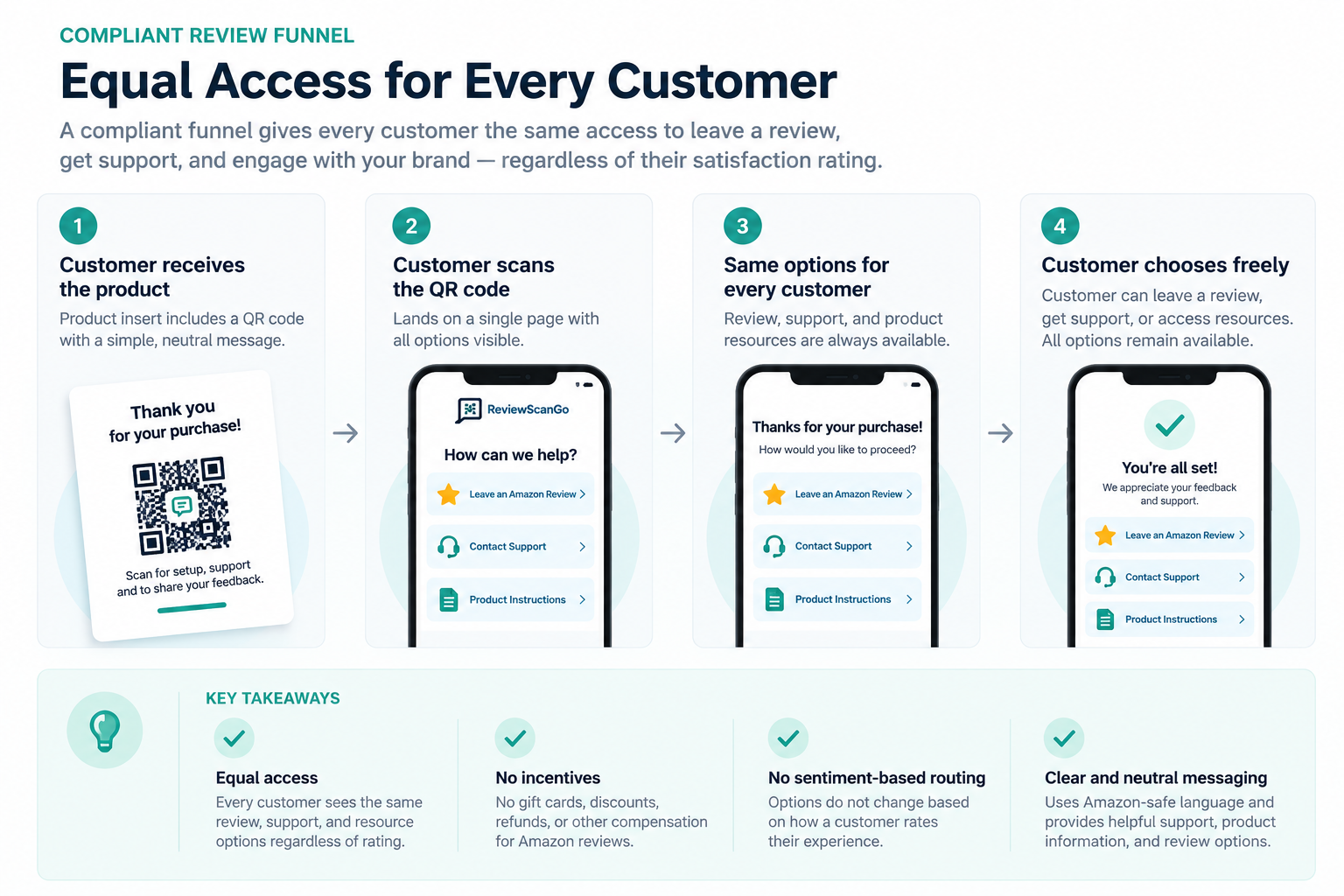
What a ReviewScanGo Funnel Looks Like
A typical neutral ReviewScanGo customer experience can follow these steps:
- Customer receives the product. A product insert includes a QR code directing customers to helpful product resources.
- Customer scans the QR code. The customer opens a branded landing page containing product information and available customer service options.
- Customer chooses how to proceed. Where review requests are included, they are presented neutrally and without filtering customers based on satisfaction.
- Customer takes action. The customer may access support, product resources, or an honest review opportunity, without a review-linked reward or penalty.
Example 2: Star-Rating-Based Routing
Customers giving high satisfaction ratings receive an Amazon review request. Customers giving low ratings receive only a private feedback form.
This is selective review solicitation based on customer sentiment.
Example 3: Review Incentives
A customer is promised a gift card or discount after submitting an Amazon review.
Amazon prohibits compensation in exchange for reviews, regardless of the requested rating.
Example 4: Product Support
A QR code opens product instructions, troubleshooting information, and a support contact option.
No review request is conditioned on whether the customer needs assistance.
A legitimate customer support use case, subject to marketplace communication and off-platform contact restrictions.
Example 5: Neutral Review and Support Options
A landing page presents clearly labeled review and support options. Neither option changes based on customer satisfaction.
A safer design than sentiment-based routing, although the entire experience still requires policy review.